The practical answer.
Distinguish stored charge from current capability and ask for the conditions behind a polymer battery's published ratings.
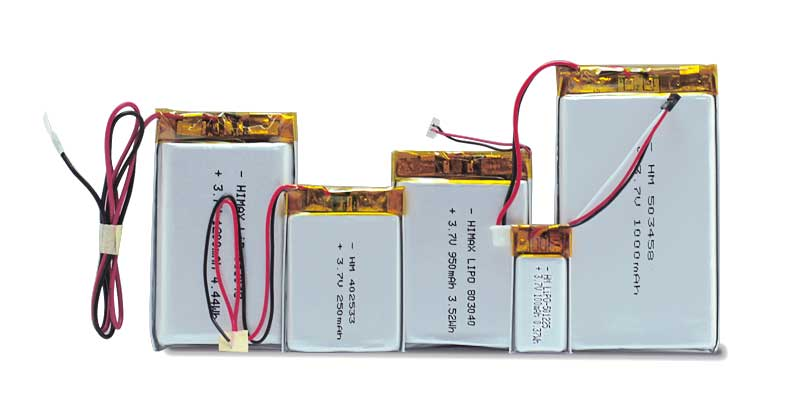
Capacity and current answer different questions
Capacity indicates the amount of charge a battery is rated to deliver under stated conditions. Current capability describes how much load it can support within its operating limits. A high-capacity LiPo pack is not automatically appropriate for a high-current device. Begin with the equipment's measured average consumption, startup behavior and repeated peak demands. This separates the runtime problem from the power-delivery problem and helps the supplier propose a design that can be assessed against both requirements.
Interpret a C-rate with its test conditions
A C-rate relates current to rated capacity. As an illustrative calculation, 1C for a 2Ah battery corresponds to 2A, while 0.5C corresponds to 1A. This is arithmetic, not permission to operate a particular pack at those currents. The approved pack specification must establish the permitted rate, duration, temperature and other conditions. Ask whether an advertised number is continuous or a pulse rating, and how pulse duration, rest periods and temperature rise were defined in the supporting test.
Review the complete current path
A finished pack includes more than cells. Tabs, interconnects, protection components, wiring and connectors contribute to its behavior under load. The equipment installation also affects cooling. Ask for the rated current of the finished assembly and its relevant test conditions instead of applying a bare cell rating to the whole pack. Include the connector and cable design in the review. A connector with the desired shape does not necessarily have the appropriate electrical rating for the project's duty cycle.
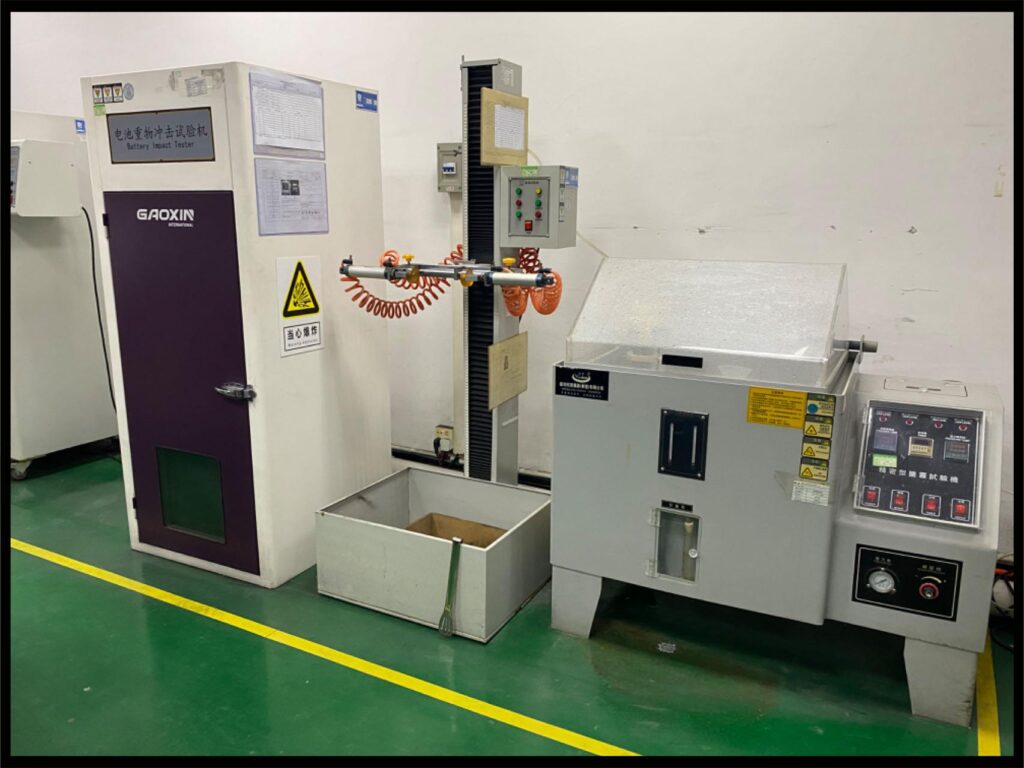
Match the charger and protection design
The charging profile must match the exact cell chemistry and series arrangement. Do not infer the charge endpoint from a nominal voltage or from a similarly shaped pack. Define charge current, temperature restrictions and the behavior expected after a protective event. For a multi-cell design, confirm how the proposed system manages cells and monitors relevant conditions. Any balance connection or communication interface should have a clear pinout and operating description. Integration details should be reviewed by the responsible battery and product engineers.
Validate in a representative device
Ask for a sample test plan that includes the actual operating sequence, enclosure and charger. Measure whether the equipment meets its runtime target and remains within agreed operating limits. Preserve the test method, sample identity and specification revision so results can be compared later. If the cell model, connector or construction changes, revisit the relevant checks. Jetray's LiPo range offers a starting point for discussion; the final design decision should rely on confirmed finished-pack ratings rather than isolated capacity or C-rate labels. If the supplier proposes a different cell, ask which current and charging checks need to be repeated for that alternative.
Bring these points into the inquiry.
Use the checklist to organize a project discussion, then request the exact model specification, drawing and relevant evidence.
| Review point | Information to agree with the supplier |
|---|---|
| Document the complete envelope | Share dimensions, tolerance, lead length and connector direction. Allow for the manufacturer's mechanical guidance. |
| Describe the charge system | Provide the charger or charging IC details, voltage limits and temperature monitoring requirements. |
| Validate the assembled device | Evaluate the battery in its actual enclosure under normal and expected worst-case operating conditions. |
Sources & further reading
Prepared for the lithium polymer batteries collection. General engineering guidance does not replace a model-specific datasheet or application validation. Source review: 4 November 2026.